



Spray liquid 1K-WB coating on bike frame with electrostatic rotary bell
Access complex shape parts, paint waterborne material continuously and save up to 50% of paint with Sames external charge rotary bell.

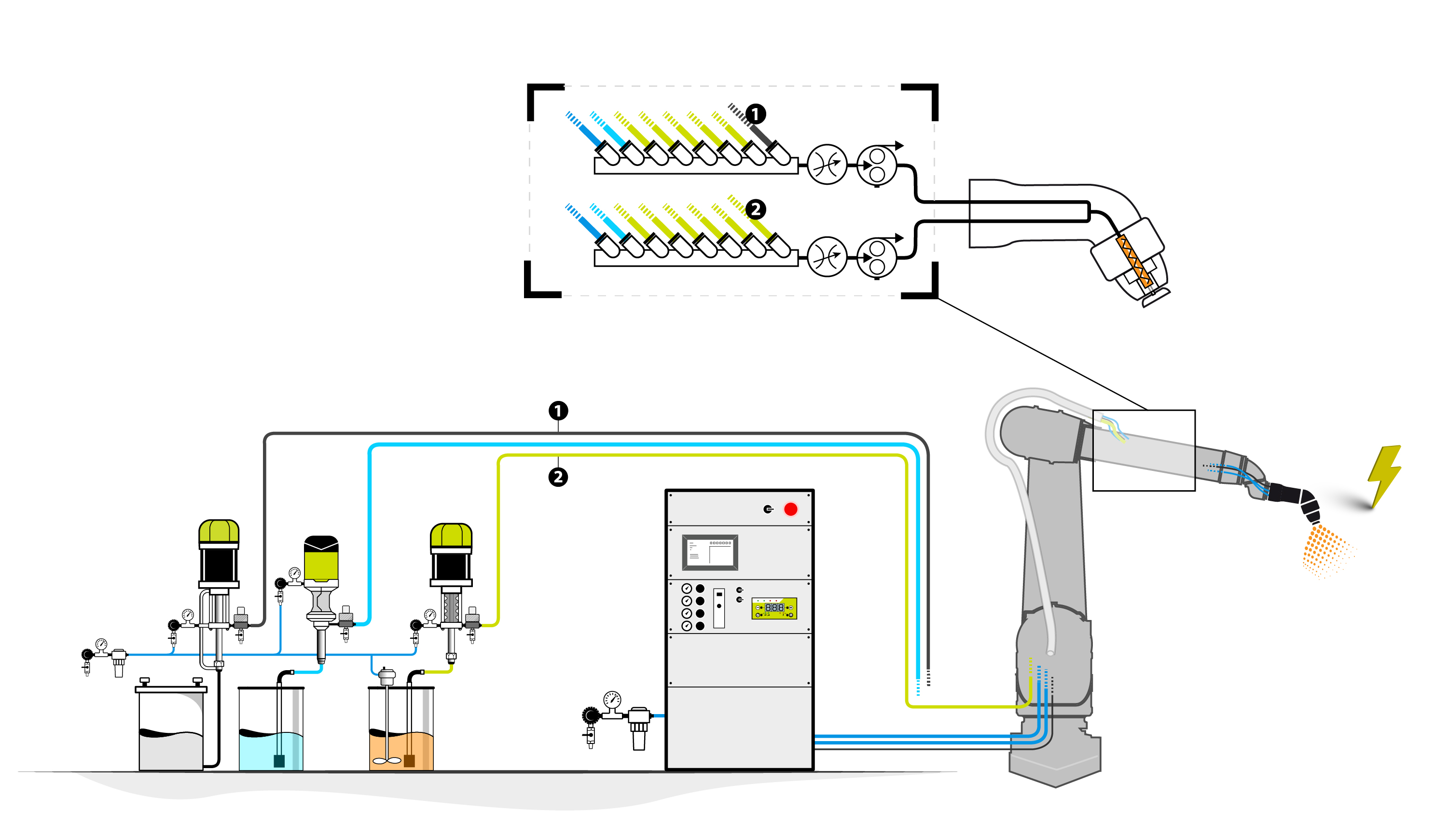

Productivity: Compared to a conventional omega booth, the robotic solution maintains the same output while drastically reducing downtime during color changes.
Efficiency: Reduce paint consumption by up to 50% vs. disc systems in omega booths, thanks to precise robotic applications along the bike frame geometry and the outstanding transfer efficiency and wrap-around performance of the electrostatic rotary bell.
Process Reliability: Guarantee consistent 2K performance with precise volumetric gear pump dosing, fully sealed hardener circulation, and final-stage static mixing for optimal material control and reduced rework.
High transfer rates, achieved by ultra-precise trajectories optimized for the part to be painted. With an electrostatic bell, this rate can reach 70-80%, even with unfavorable geometries like tubular bike frames.
Yes. The external charge and fingerless design of the PPH 707 EXTi allow the robot to spray very close to intricate and tubular shape of bike frames. This enables excellent coverage on complex geometries, minimizing shadow areas and reducing manual touch-up operations.
By switching from disk in omega booth to an electrostatic rotary bell system, manufacturers can achieve up to 50% higher transfer efficiency. This reduces paint waste, lowers VOC emissions, and improves overall coating cost efficiency.

